Quality Education

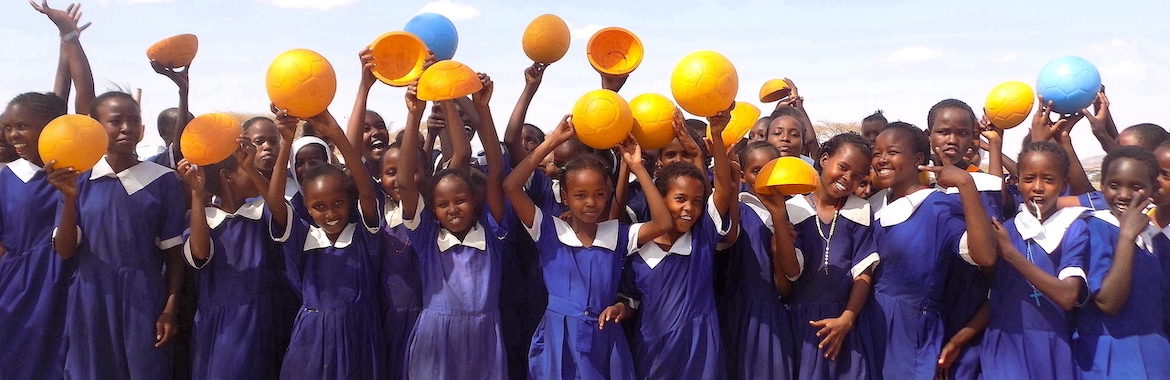
For many years HODI’s catchment area has been marked by low school enrolment and high dropout, for reasons that are neither simple nor single. Distance. Drought that moves families and their livestock. School fees a pastoralist household cannot meet in any year. A girl kept home when she menstruates because there is nothing to use. Early marriage.

We work on the practical barriers that keep children, and girls in particular, out of a classroom, and on the reasons they leave once they are in one.

What We Are Trying to Change

Our objective: to create an enabling environment for learning among children and adults in Marsabit and the Horn of Africa.

We pursue this in three ways.

Empowering women and young men

Sensitising women and young men on girl child education, with exposure and experiential learning.

Partnerships for advancing education

Stakeholder meetings on education in the community, scholarships for vulnerable households, essential materials for children in school, and psychosocial support for victims of early marriage, gender based violence and teenage pregnancy.

Performance improvement

Mentorship and talks on academic performance, and participation in extracurricular activities.

We are working towards steady enrolment of children in schools and in adult learners’ classes, a measurable improvement in primary school performance, and county and national government actively engaged in advancing girls’ education in northern Kenya.

What We Have Done

Scholarships and staying in school

In 2022 we provided tuition support to 128 girls, mostly in rural day secondary schools, at an average of about KES 5,900 a girl, roughly EUR 48. In 2020 the same project supported 96 girls.

Sanitary provision, made here

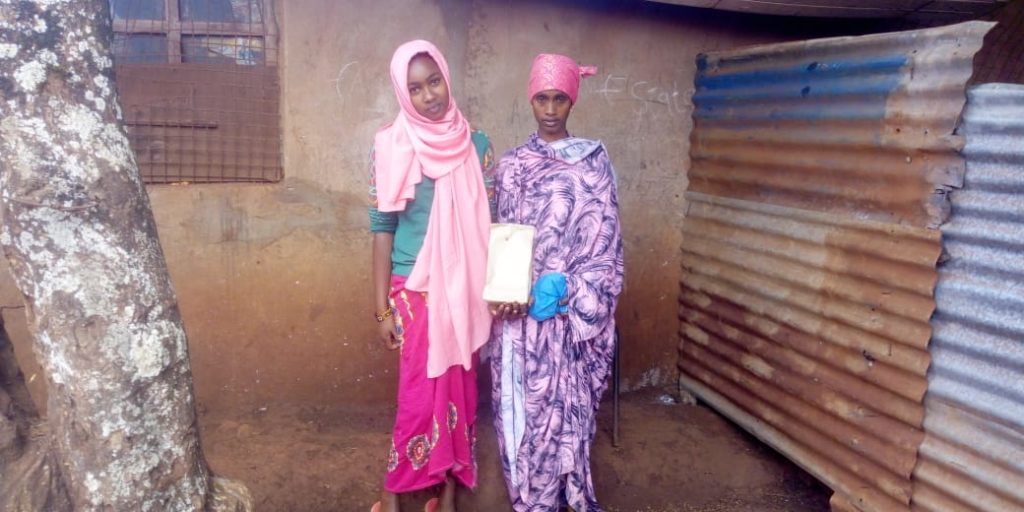
HODI ran a tailoring centre that produced reusable sanitary pads. Girls receiving scholarship support receive a pack of five. In 2022 we produced 277 reusable pads. A girl who misses a week of school each month due to periods does not fall behind by a week.

Learning where there is no teacher

Our Audio Learning in Marsabit project has reached about 18,000 learners using solar powered radios since 2016, delivered with Lifeline Energy, taking lessons to children and adult learners in places a timetable does not reach.

Clubs and life skills in schools

Study circle clubs in twenty schools. In 2023, 800 participants across four schools took part in our combined life skills programming.

Young women into leadership

The Young Women Leaders Project graduated its cohort in 2019.

Working with government

HODI works with the county and national government on girls’ education in northern Kenya rather than alongside them.

Funded by GlobalGiving.

Girls in northern Kenya face a cultural and systemic bias that has held for generations. They are less likely to be enrolled, more likely to be withdrawn, and more likely to be married before they finish school.

What the project does

  • Partial or full scholarships for girls in rural secondary schools, so that fees are not the reason a girl stops attending
  • Reusable sanitary pads, made at HODI’s own tailoring centre, so that menstruation is not the reason she misses a week a month
  • Life skills training alongside the material support
  • Work with parents, community leaders and schools on why a girl’s education is worth the cost

Results

128 girls supported in 2022 at an average scholarship of about KES 5,900 each, and 96 girls in 2020. 277 reusable pads produced in 2022, distributed as packs of five.

The project has supported 5 girls to complete high school education between 2023 and 2025.

To support this work, please donate on GlobalGiving.

Delivered with Lifeline Energy.

In a county the size of a small country, with settlements far from any school and families that move with their livestock, the classroom does not always reach the child.

Audio Learning puts the lesson where the learner is. Solar powered radios carry recorded lessons to children and to adult learners’ classes, in places with no mains power and often few teachers. Solar lights distributed alongside them mean a child can study after dark.

Reach: about 18,000 learners since 2016.

Delivered with CFBT. Ran from 2013 to 2016 across 30 communities and 35 schools in Marsabit.

The problem we set out to solve

Primary education in Kenya has been free since 2003, and compulsory since the Education Act of 2013. In Marsabit that has never been the same thing as available.

Only 26.2 per cent of people in Marsabit Central could read and write, against 66.4 per cent nationally. The county ranked 44th of 47 for literacy. Enrolment was falling: from 4,819 boys and 4,941 girls in 2012 to 4,355 boys and 4,847 girls by 2015, with 117 boys and 108 girls dropping out in 2015 alone. Sixty-five per cent of people in Marsabit Central lived below the poverty line.

The reasons were not mysterious. School fees a pastoralist household cannot meet in a drought year. Girls kept home for chores, married early, or cut. Boys herding livestock instead of sitting in class. Long distances. Children with disabilities kept out by stigma. And a widely held belief that educating a girl benefits the family she marries into, so there is little reason to bring her back after she drops out.

Girls went from a minority of enrolment to a majority

In 2015, boys were 57 per cent of enrolment in the sampled schools and girls 43 per cent. By 2016 that had reversed: girls 53.2 per cent, boys 46.8 per cent. In the lower classes the shift was sharper still, with girls at 63.3 per cent of class three.

Attendance rose from 77 per cent at baseline to 95.5 per cent by June 2016, and for girls to 96 per cent, slightly ahead of boys.

Removing the reasons children leave

1,883 children received back-to-school kits. 966 households received cash transfers.

10,973 children were dewormed, 5,230 boys and 5,743 girls.

1,690 children referred to the services they needed in order to stay in school: social protection, health, livelihoods, disability support, legal aid and psychosocial support. 1,126 of them girls, against a target of 500.

1,440 girls and most vulnerable children enrolled in 2016, 861 of them girls.

Thirty communities built their own databases of children out of school or at risk of dropping out, and set their own criteria for who counted as at risk.

Changing what adults believe

All thirty communities were taking action to prevent child abuse by the end of the project. At baseline three were.

The share of teachers who said it is sometimes a girl’s fault if a student or teacher touches her indecently fell from 21 per cent to zero. Among students it fell from 10 per cent to 4 per cent.

Thirty Manyatta Education Committees were formed, from a baseline of none, alongside Moran and men’s base circles reaching young men who sit outside school structures altogether.

Study circles and life skills

Twenty study circle clubs in twenty schools, with 800 children in weekly sessions, 400 girls and 400 boys. In 2015 the clubs ran 1,200 weekly sessions against a target of 800. One hundred and twenty club leaders met monthly for review and mentorship, supported by forty trained patrons.

High-risk behaviour among 10 to 14 year olds fell from 31 per cent to 4.4 per cent.

In 31 of 35 schools, students had raised concerns formally with the school board in the past year. At baseline it was nine.

Safer, better-run schools

34 of 35 schools met the Ministry of Education and UNICEF Child Friendly Schools standard, up from 20 at baseline. 340 copies of the framework were distributed across 34 schools, with teachers and board members trained in every one.

61 teachers took part in teacher quality circles. Pupils meeting the minimum numeracy standard rose from 39 per cent to 56.5 per cent.

Holding the system to account

101 community facilitators trained in social accountability and in drafting petitions, 42 of them women.

Nineteen of thirty communities submitted at least one petition to county authorities on the education of girls and vulnerable children.

Eighteen of thirty communities tracked how education money was spent, and all 35 schools displayed their budget on the notice board.

What outlasted it

The project closed at the end of 2016. The county’s own numbers moved with it: KCPE mean scores in Marsabit rose from 249.0 in 2013 to 261.08 in 2015, and early childhood enrolment across the county from 14,612 in 2013 to 18,826 in 2016.

HODI today runs mala marii, which is the local term for community dialogues, where facilitators are trained to draft petitions and the study circle model still shapes how we work in schools.

Support for Quality Education work

HODI is grateful to GlobalGiving for their support of our work in education.